Blog

The official photo blog of J. David Buerk Photography.

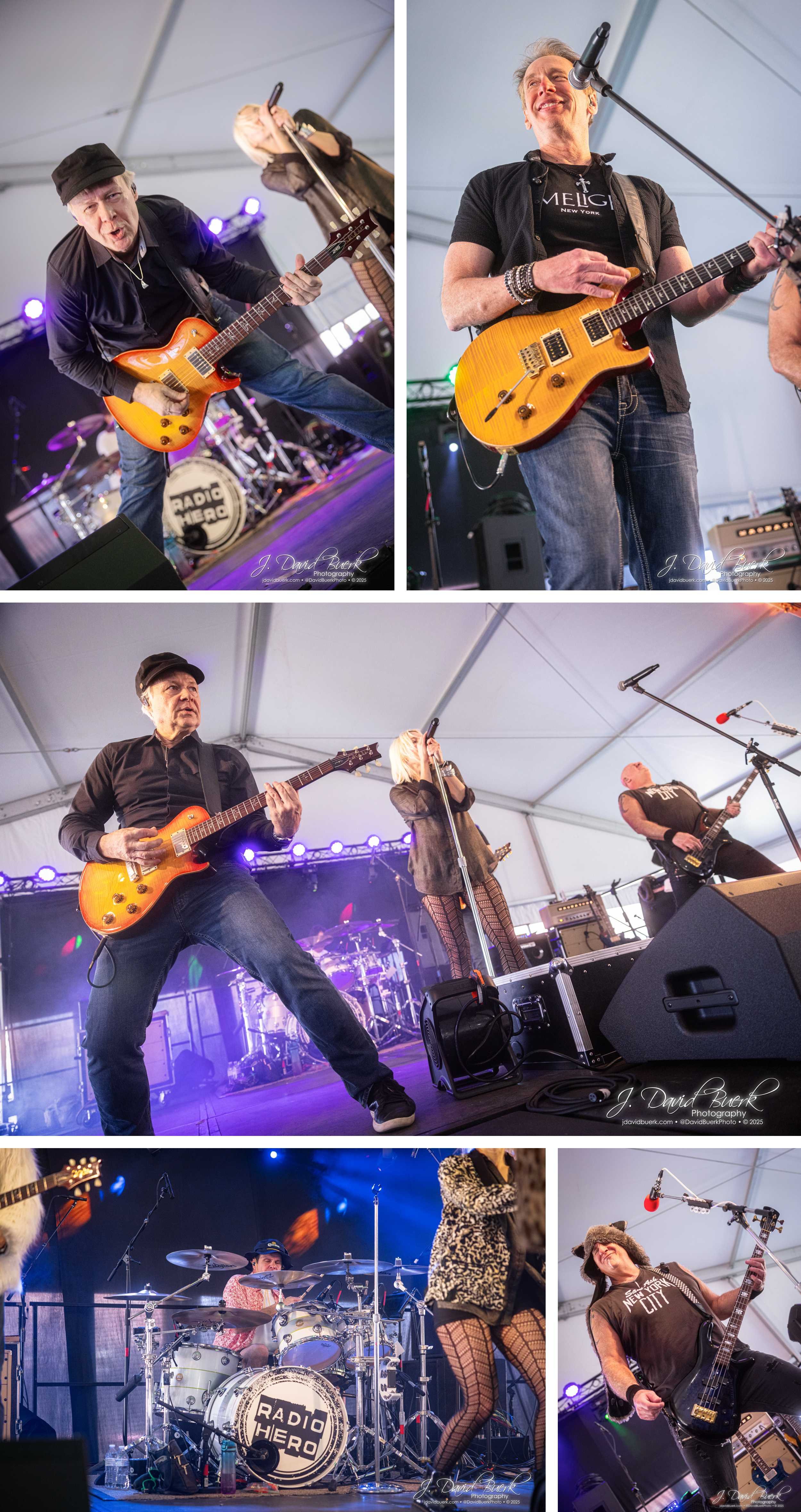
Guinness Open Gate Baltimore: St. Patrick's Day + Radio Hero

It’s only once or twice a year I really get to celebrate the Irish half of my heritage, and last year after briefly meeting up with a friend catching a flight, I decided to treat myself and finally go check out the Guinness Open Gate Baltimore brewery which I was nearby.  I’m not a huge beer person, but when I do go for one, Guinness is typically my first choice, or other stouts - not surprising as a daily coffee drinker.

My main goal was to get lunch and relax a little while I was out near Baltimore since I’m not out that way very often, but I saw online that the brewery had St. Patrick’s Day celebrations scheduled all weekend even though this was a few days before the actual holiday.  Going in blind and not knowing what to expect, I was pleasantly surprised that not only was there a live band playing, but there were multiple spots and a vendor fair indoors and (tented) outdoors to check out and choose from.

Since I was mainly there to eat something, I didn’t even see if any brewery tours were available the day I was there - I suspect not, and would prefer seeing that as more of it’s own dedicated day.  Outside, with my fish and chips and my first selection of Guinness — a brew I had never even heard of them making before — I enjoyed the band playing a selection of Top 40 covers from the last couple decades; lots of millennial hits.  The band was fittingly titled Radio Hero.

Total Lunar Eclipse: March 14th, 2025

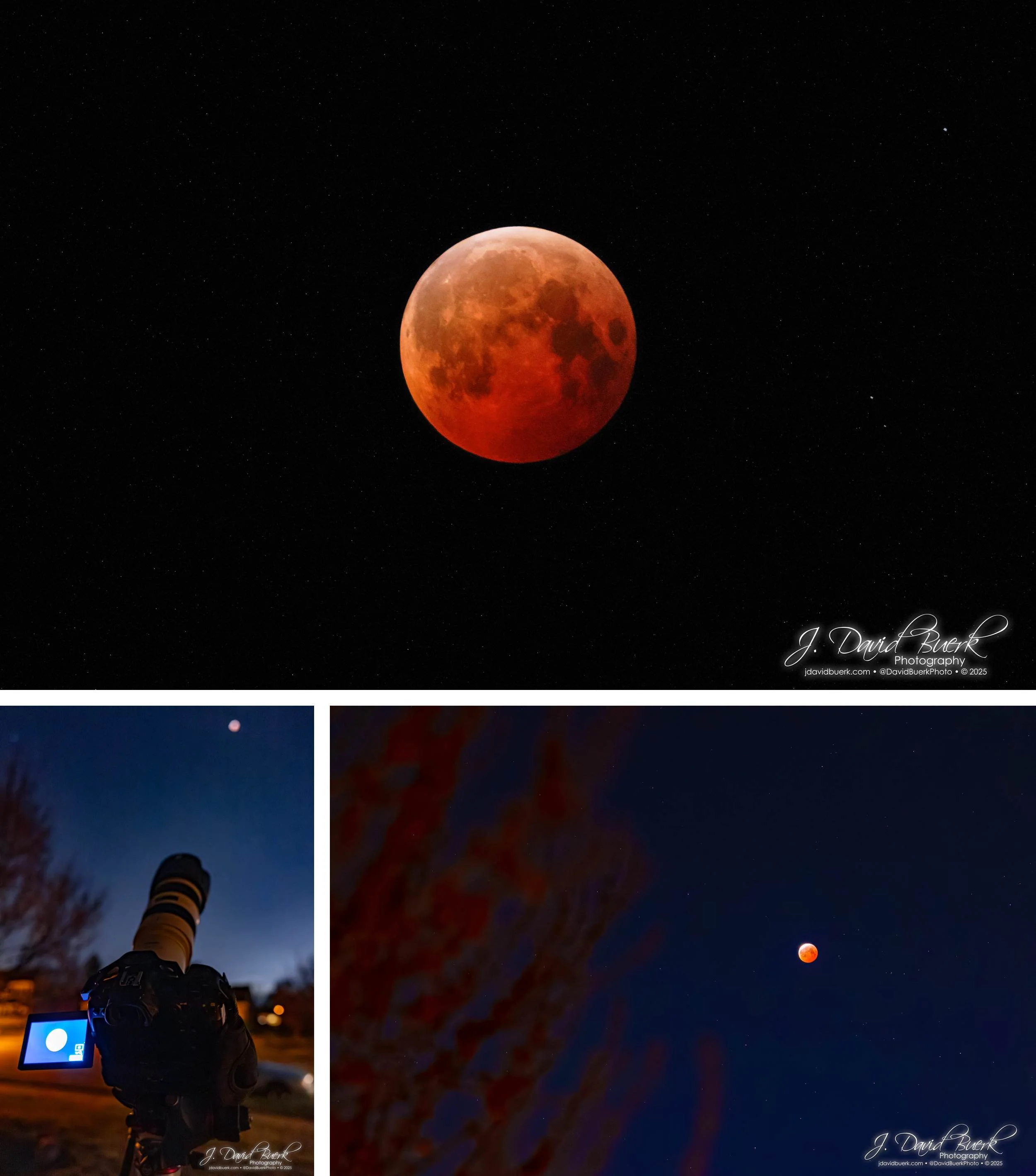
Last year we were treated to a solar spectacle we haven’t seen since 2017, and this year, to kick off Spring, we got a great lunar show as the moon was totally eclipsed by Earth’s shadow.  The DC area lucked out, with a nearby storm system going wide, leaving the skies clear for the entire red totality.  It’s been a few years since I saw a Blood Moon eclipse, and this one looked like a cataract peering through the black curtain of night sky, or at maximum totality as though Mars had entered our orbit for the night.

I used a slightly different capture process for this photo than I typically do for astrophotography, which allowed me to capture more detail at a much higher ISO than I would normally shoot, and allow me to avoid the noise normally found natively at those ISOs.  The result is this image, which is a single exposure with the stars visible behind the moon, not a composite or blend of multiple exposures.

2025 Washington Auto Show + HDR Commentary

Today’s post comes with a giant 🤓nerd-alert🤓, as I discuss technical details in an evolving World of imaging, applied to car geekery.

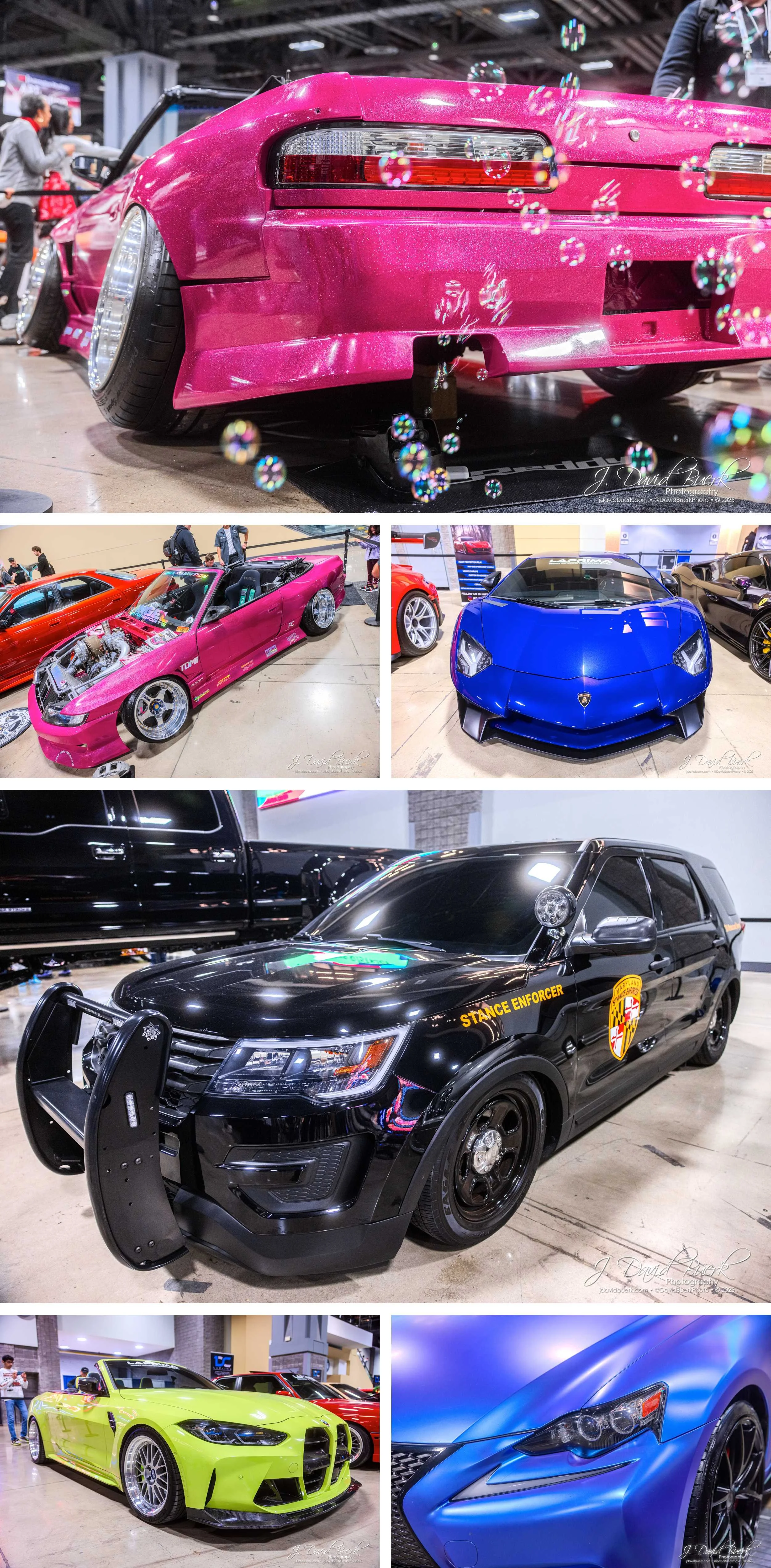
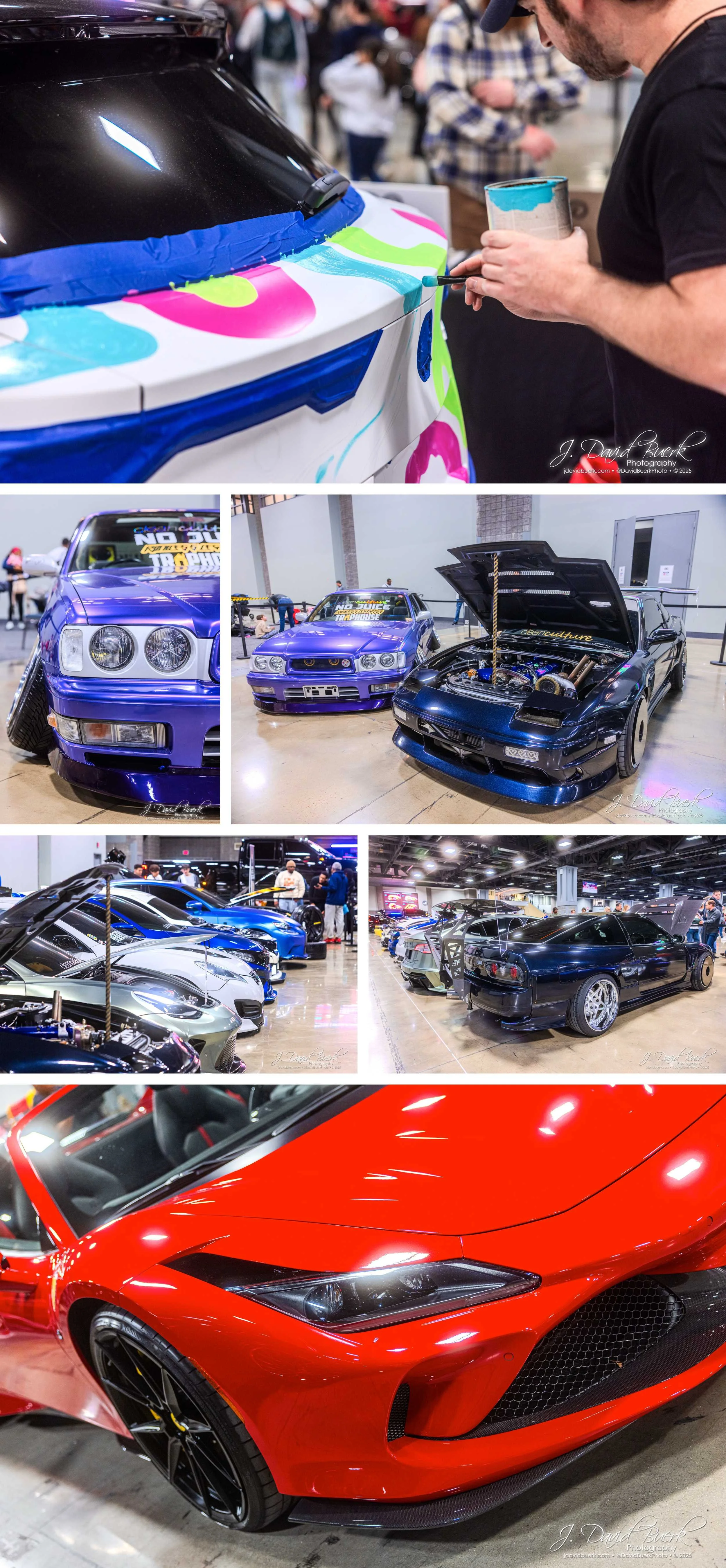
Like most years at the Washington Auto Show, I spent my time at 2025’s expo exploring the show floors with a camera, using the event to casually experiment and hone skills in between exploring the latest automotive offerings.  Practicing upcoming techniques in no-pressure situations is a great risk-free way to keep skills on the cutting edge.

Last year I gathered footage to practice with my HDR video editing workflow.  This year I did the same with some proper 120fps footage, and also edited all still images from the day in HDR, as HDR still formats are upcoming and I like always staying knowledgeable and prepared.

I’ve edited several personal photosets in HDR to practice and learn how the new formats accommodating expanded range of luminance is currently able to be edited and to ensure backward compatibility with SDR displays - for video, HDR is widely available and supported, with practically all new TVs and productions available in HDR formats.  Photos, surprisingly, however, are supporting HDR after video, with the format war still raging on; the predominant image format and paired colorspace has not been determined yet.

HEIF/HEIC seems to be the best choice, closely related to the HEVC video standard most end-user and web HDR video is deployed as: its high efficiency compression and support of gain maps and modern colorspaces like P3, however end-user support is still limited so it has not flourished except for Apple’s usage encouraging support to expand.  AVIF is a similar format that is promising, but even less widely supported than HEIC.  JPEG XL is not new, but is a much modernized expansion of the original staple JPEG format.  Then there is finally standard JPEG, which can be encoded with a gain map to enable HDR on HDR-compatible devices and applications, and is backwards compatible with SDR in the existing standard, however it is the least efficient of these filetypes, and gain maps are something of a tack-on making these files not always interpreted correctly by some applications.

Possibly a larger issue is how HDR stills can currently be edited.  One can edit a RAW file in HDR using the standard color and contrast edits we all know and love, however editing software may also offer SDR compatibility proofing and grading, which I’ve found is not able to exactly match the HDR grade - this is a critical shortcoming in terms of backward compatibility, and ensuring a consistent deliverable to end-users.  Furthermore, editing HDR images in Photoshop and maintaining the correct grading and luminance mapping is spotty, with use of Generative AI tools strangely returning SDR results in Photoshop while the same generative utilities used in Lightroom directly on a RAW file returning HDR results (or a result that is at least properly mapped to the image’s luminance - I must assume it is generating an SDR image and an HDR gain map to pair).

In short, despite HDR video being widely supported, support of HDR still images is still extremely limited, and is not currently ready for widespread use: compatibility is king, and SDR still images are still the standard one should be using for anything mission-critical, ie client deliverables.

NOTE: The images in this post are NOT HDR; they are SDR-only; my hosting provider currently does not support HDR filetypes, as it converts all uploaded media to standard SDR JPEGs for web efficiency - hopefully some day in the future HDR data will not be stripped, and modern filetypes will be supported.  These images were natively tone-mapped on export for viewing in SDR as close as possible to their HDR versions.

2008 Hummer H2

Winter isn’t generally the most friendly time of year to photograph your vehicle, but snow makes things pretty as long as you can keep it off your paint!

This excellent condition Hummer in the final year of the H2’s production run is going up for sale soon, and I captured an exhaustive set of photos for its sale on auction platforms like Bring A Trailer.  It’s been a very long time since I was last in a Hummer, and capturing this example reminded me of why people love them so much - very comfy in any seat, and spacious with room for all your stuff to spare.

Do not contact J. David Buerk - Photography for vehicle sale inquiries.

Kaiser Permanente: 2024 Health Action Summit

The 2024 Kaiser Permanente Health Action Summit, held on April 11th, was a remarkable gathering that brought together some of the most influential leaders in public health and policy. I had the privilege of documenting key moments including the presence of D.C. Mayor Muriel Bowser, U.S. Secretary of Health and Human Services Xavier Becerra, CDC Director Dr. Mandy K. Cohen, and former U.S. Surgeons General Dr. Jerome Adams and Dr. Regina Benjamin. The summit addressed pressing issues such as climate change, gun violence, and social determinants of health, with a strong emphasis on the need for innovation and transformation in healthcare to meet these challenges head-on.

Throughout the day, keynote speakers and panelists engaged in deep discussions about the future of public health and the role of clinicians in shaping the healthcare landscape. Secretary Xavier Becerra highlighted the importance of leadership in health policy, while Dr. Mandy Cohen shared insights on the future of public health in a fireside chat. The former Surgeons General, Dr. Jerome Adams and Dr. Regina Benjamin, offered a retrospective on their experiences and the evolving needs of public health leadership. The summit provided a platform for thought leaders to collaborate on strategies to build a stronger public health ecosystem, address health disparities, and accelerate movements such as "Food is Medicine," ultimately fostering a healthier future for all.