Blog

The official photo blog of J. David Buerk Photography.

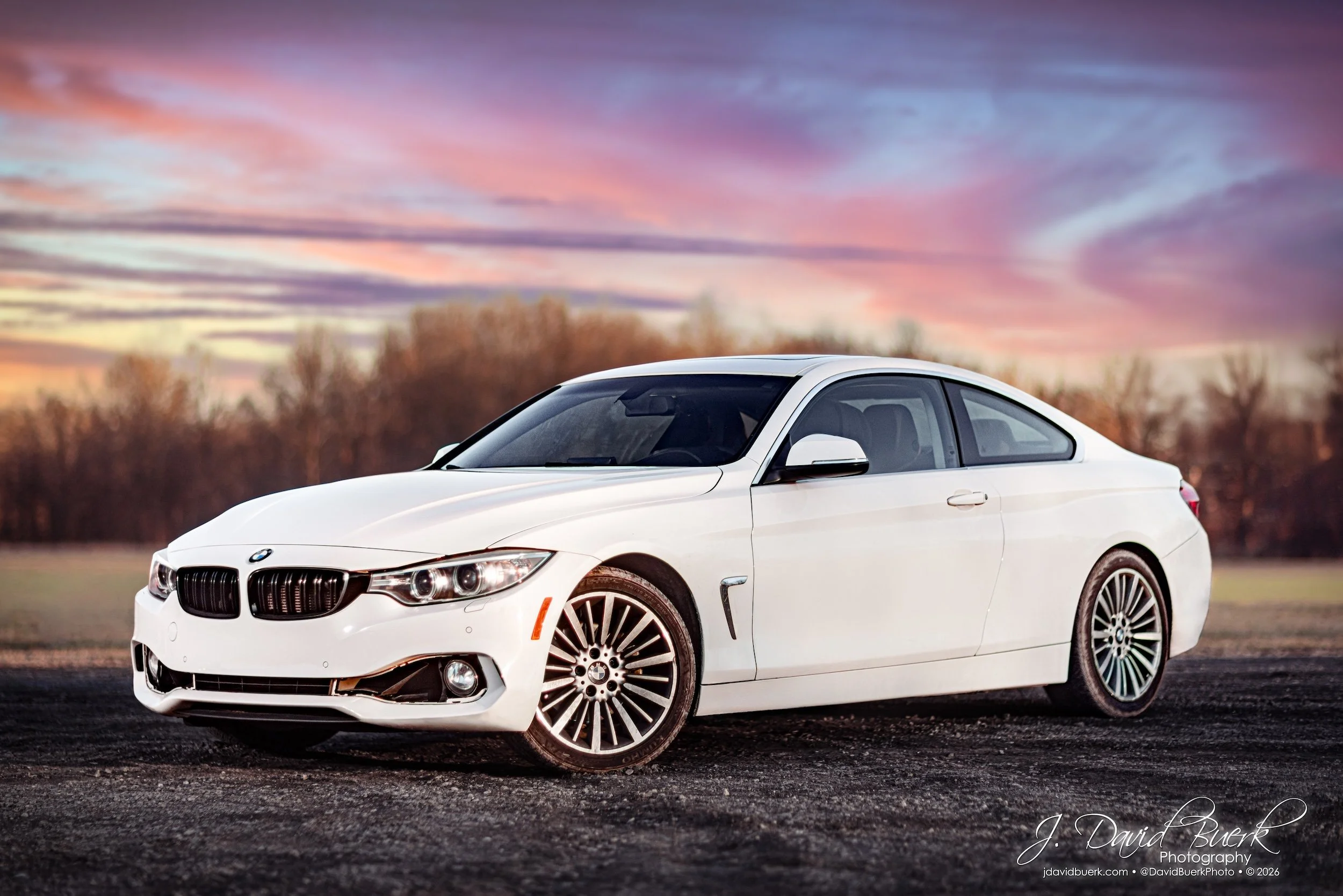
2014 BMW 4 Series

During a recent car photoshoot, someone driving by in a BMW 4 Series saw me photographing a vehicle, and asked me to shoot theirs too - I told them I’d shoot one photo and had to continue on with what I was working on, and this is that photo.

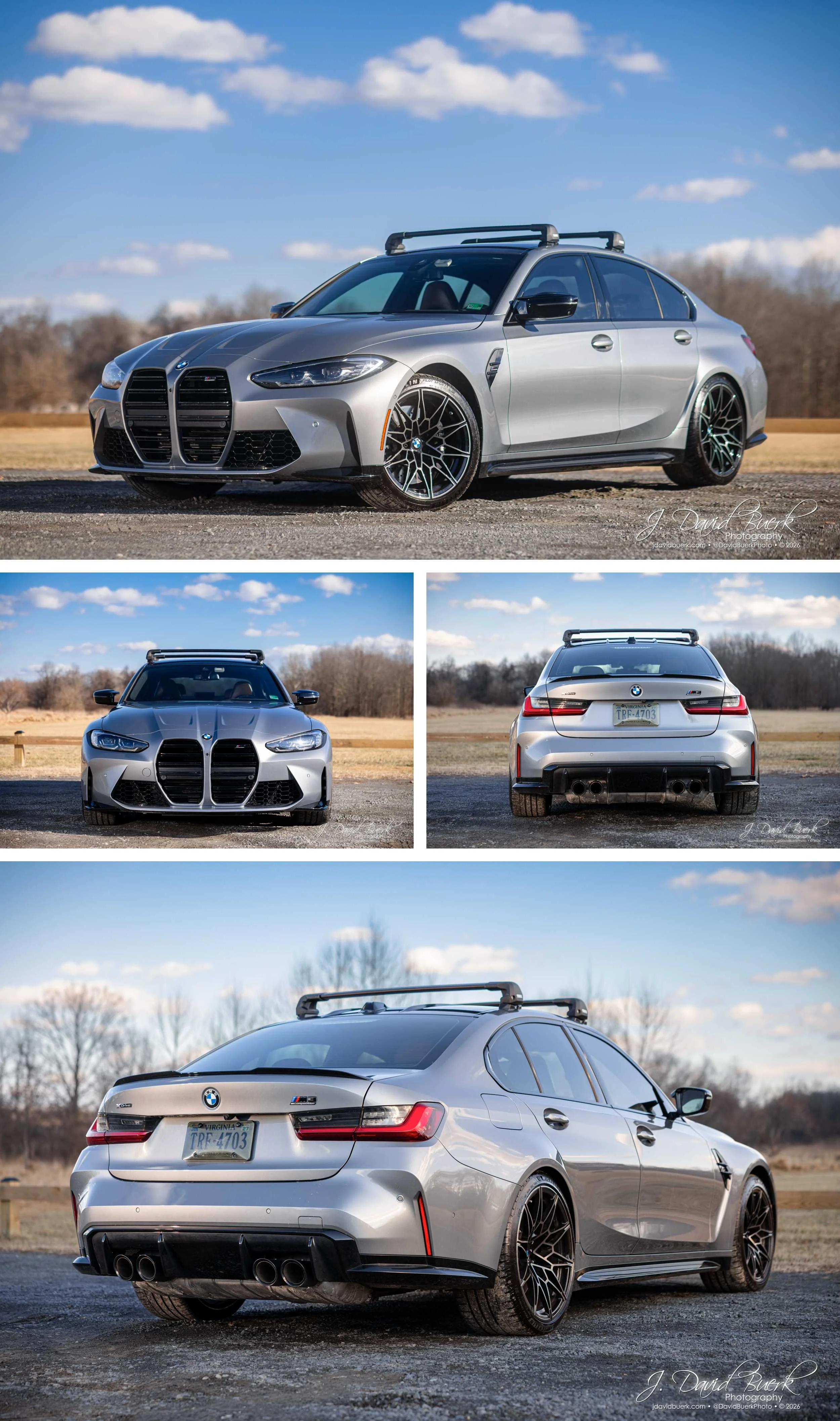
2024 BMW M3

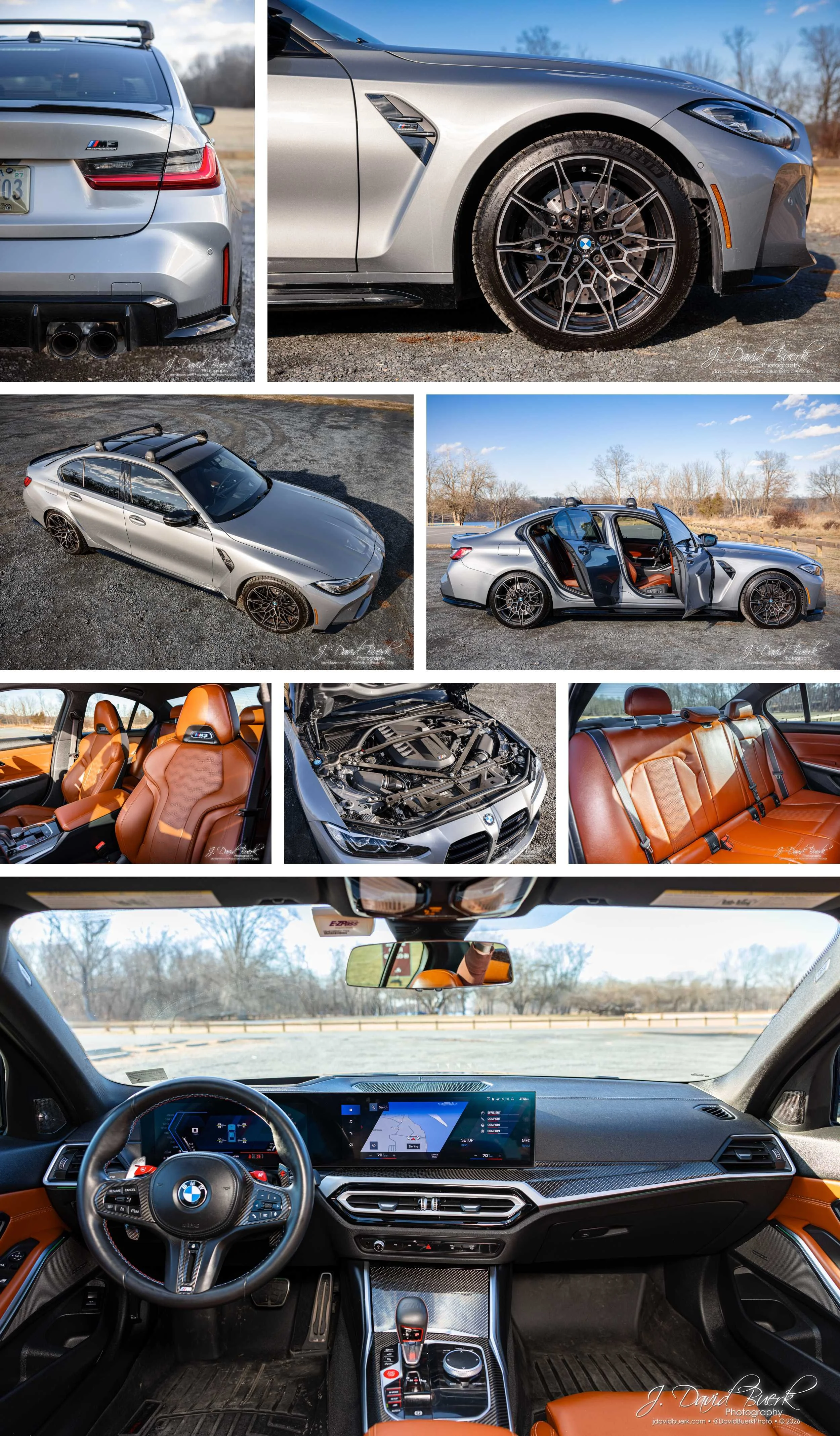
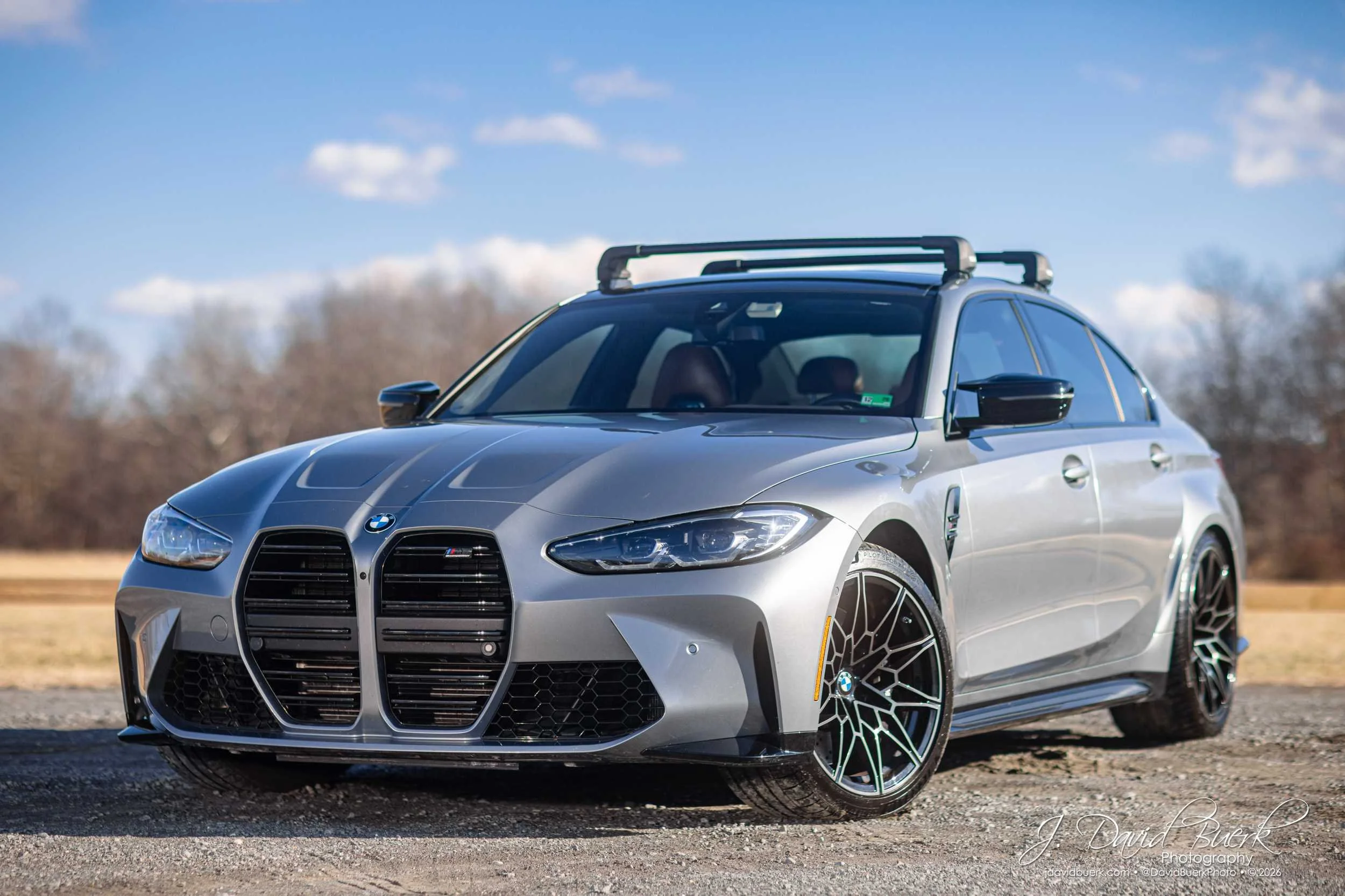
In today’s post, enjoy this 2024 BMW M3 photographed in the Winter in preparation for sale at auction.

The 2024 BMW M3 is a high-performance luxury sports sedan that blends everyday usability with serious track capability. Powered by a twin-turbocharged 3.0-liter inline-six engine, it produces up to 473 horsepower in the base model and 503 horsepower in Competition variants, with available rear-wheel drive or BMW’s xDrive all-wheel-drive system.  Acceleration is a defining trait, with the quickest versions reaching 0–60 mph in as little as around 3.4 seconds, backed by a finely tuned suspension, adaptive dampers, and performance-focused braking systems.  The M3 retains a driver-focused interior with sport seats, a large digital display, and modern connectivity features, while still offering practical seating for five. Known for its balance of precision handling, power delivery, and daily drivability, the M3 continues to represent BMW’s core performance philosophy in a four-door format.

When photographing vehicles for auction or sale, I capture a comprehensive photoset from all angles and capturing many more angles and details of the vehicle than highlighted here, to comply with many auctionhouses’ requirements.

J. David Buerk - Photography is not the vehicle’s seller - do not contact for vehicle purchase inquiries.
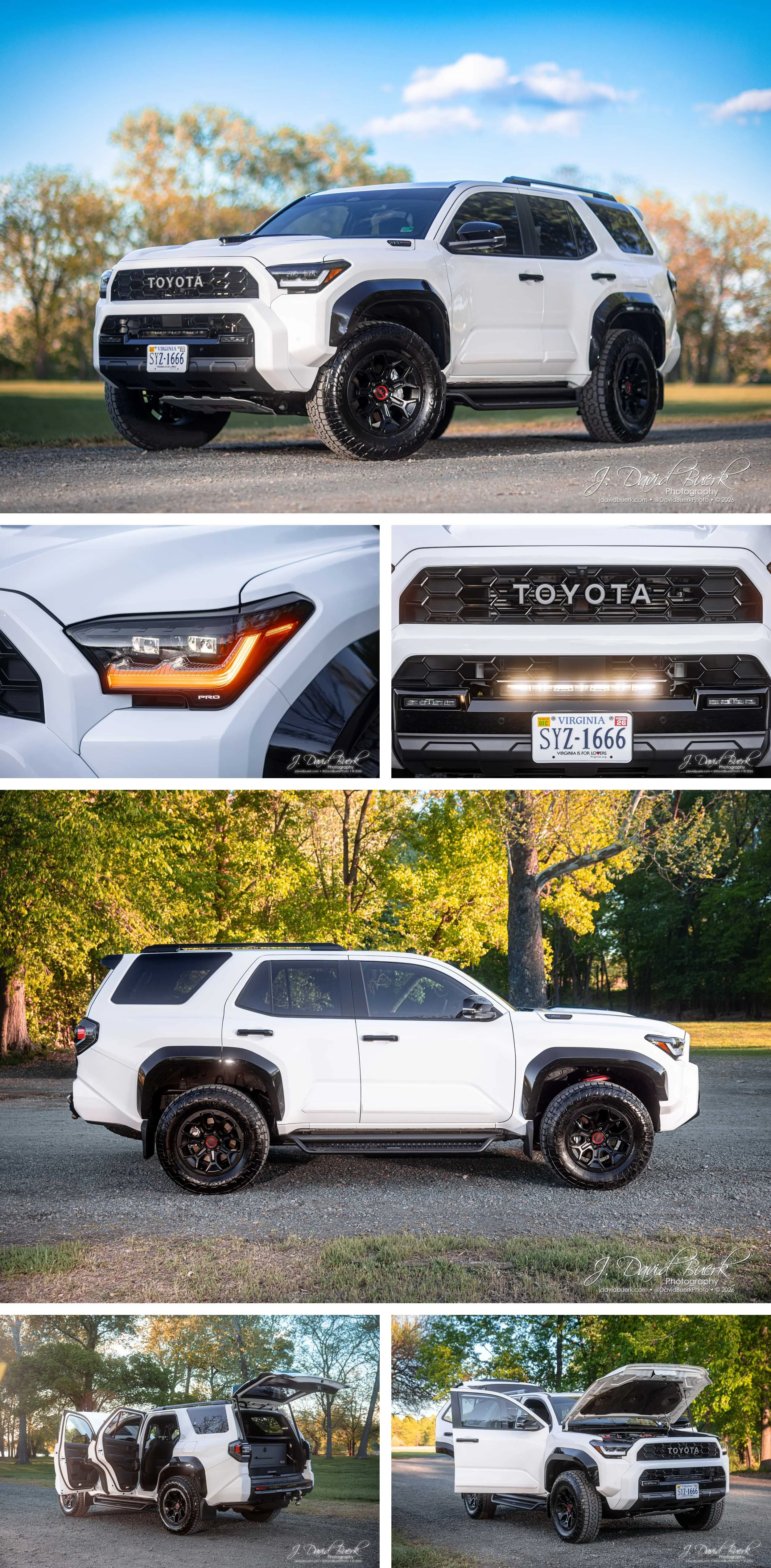
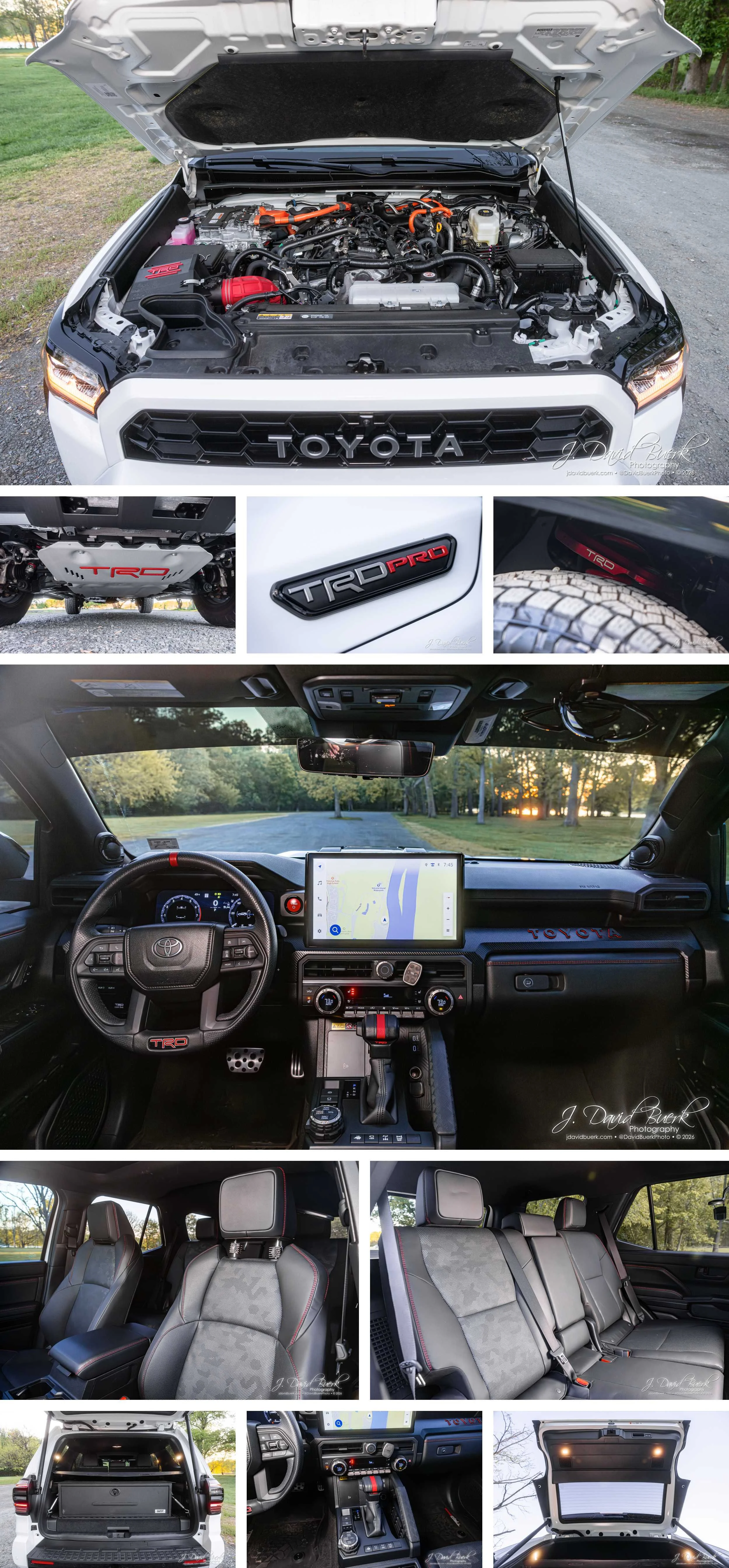
2024 Toyota 4Runner TRD Pro

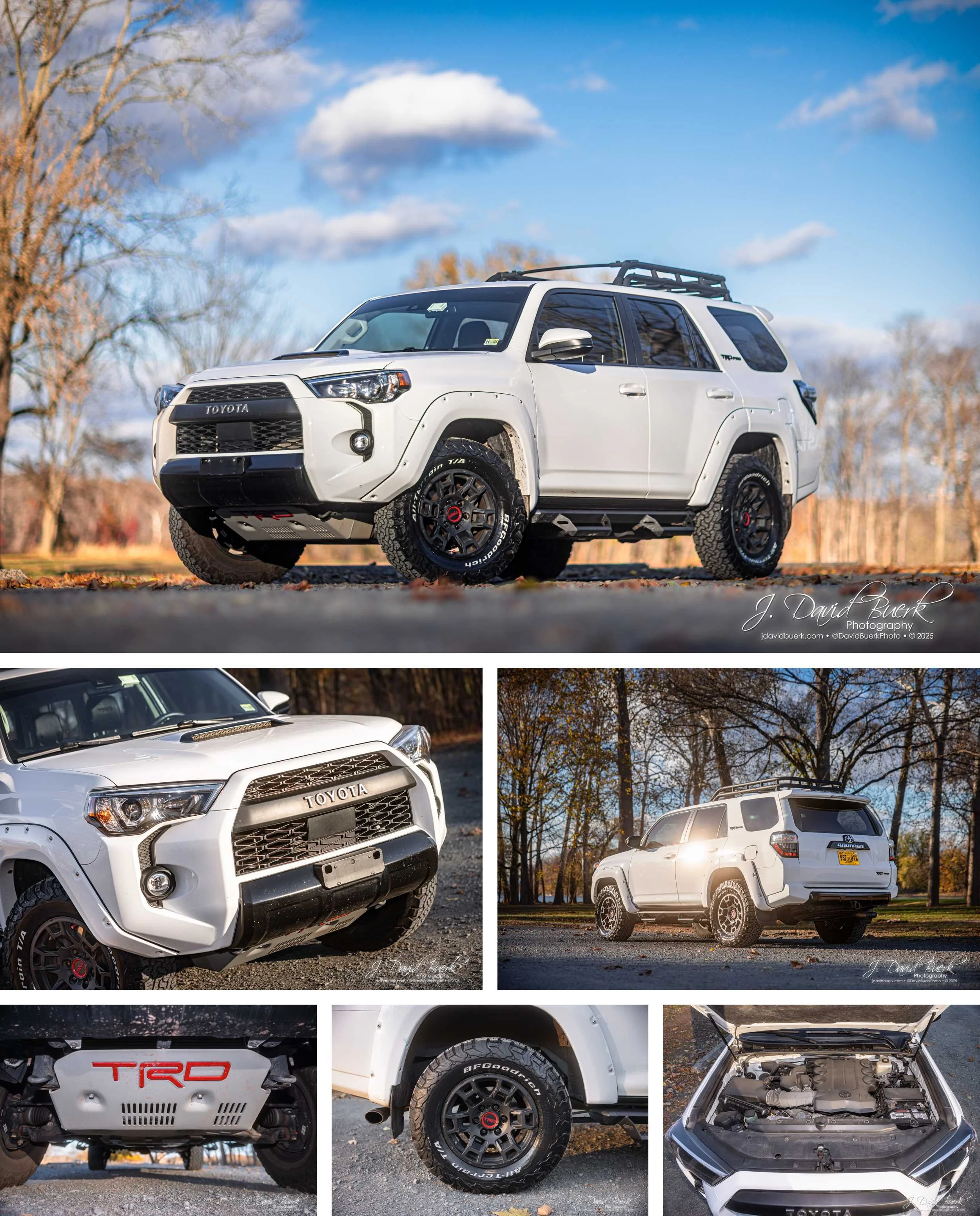
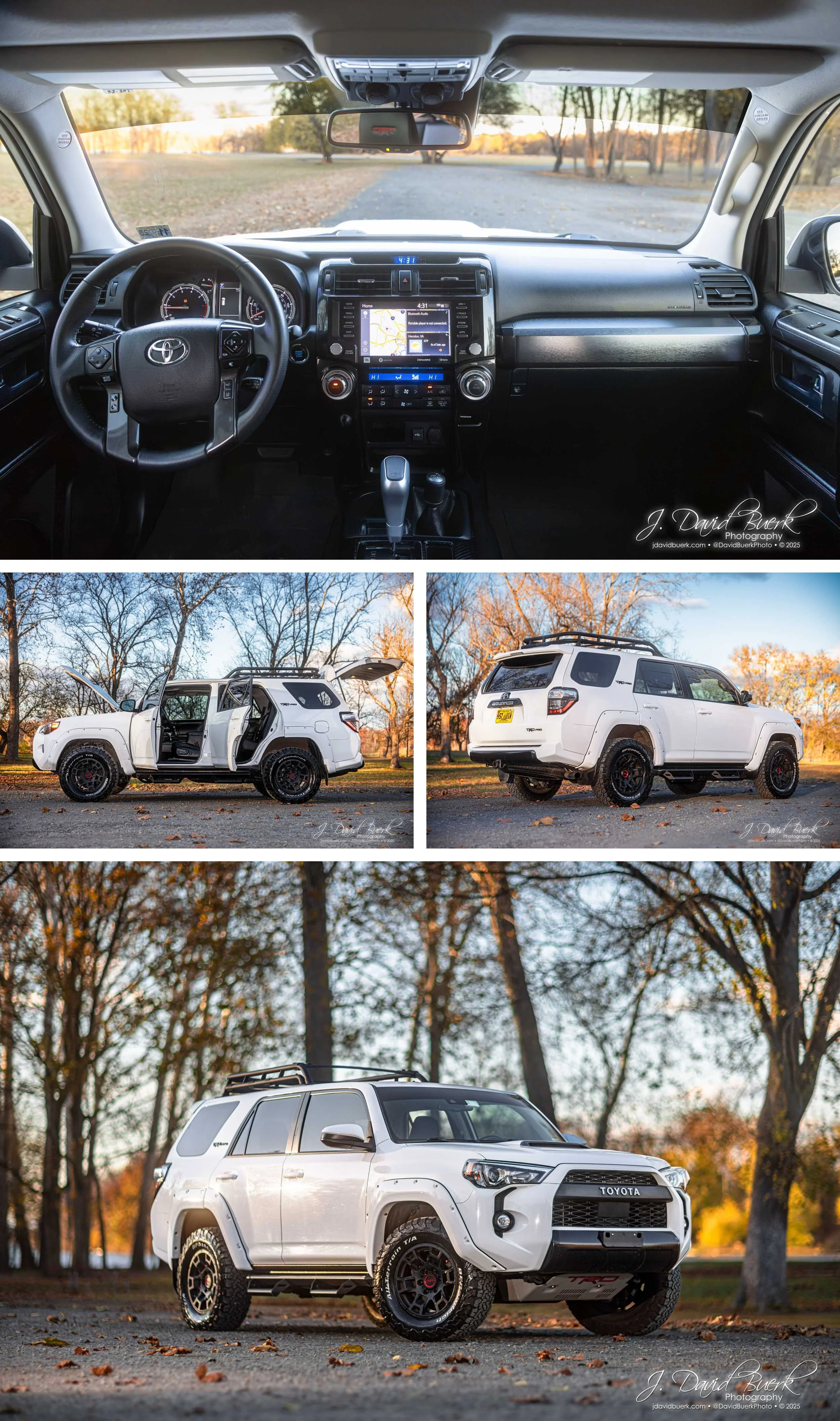
Today enjoy this N500 Toyota 4Runner TRD Pro, photographed in the Fall for sale listing.

The 2024 Toyota 4Runner TRD Pro is a rugged, body-on-frame SUV built for serious off-road capability while maintaining everyday usability. Powered by a proven 4.0-liter V6 engine paired with a five-speed automatic transmission and part-time four-wheel drive, it features upgraded TRD-tuned FOX shocks, a locking rear differential, skid plates, and all-terrain tires designed to handle challenging terrain. Its exterior stands out with a bold heritage-inspired grille, raised suspension, and unique TRD Pro accents, while the interior offers a straightforward, durable layout with modern essentials like an 8-inch touchscreen, smartphone integration, and advanced safety features through Toyota’s Safety Sense suite. Known for its reliability and long-standing reputation, the 4Runner TRD Pro continues to appeal to buyers seeking a no-nonsense SUV with genuine off-road credentials.

When photographing vehicles for auction or sale, I capture a comprehensive photoset from all angles and capturing many more angles and details of the vehicle than highlighted here, to comply with many auctionhouses’ requirements.

J. David Buerk - Photography is not the vehicle’s seller - do not contact for vehicle purchase inquiries.

2024 Cadillac Escalade ESV

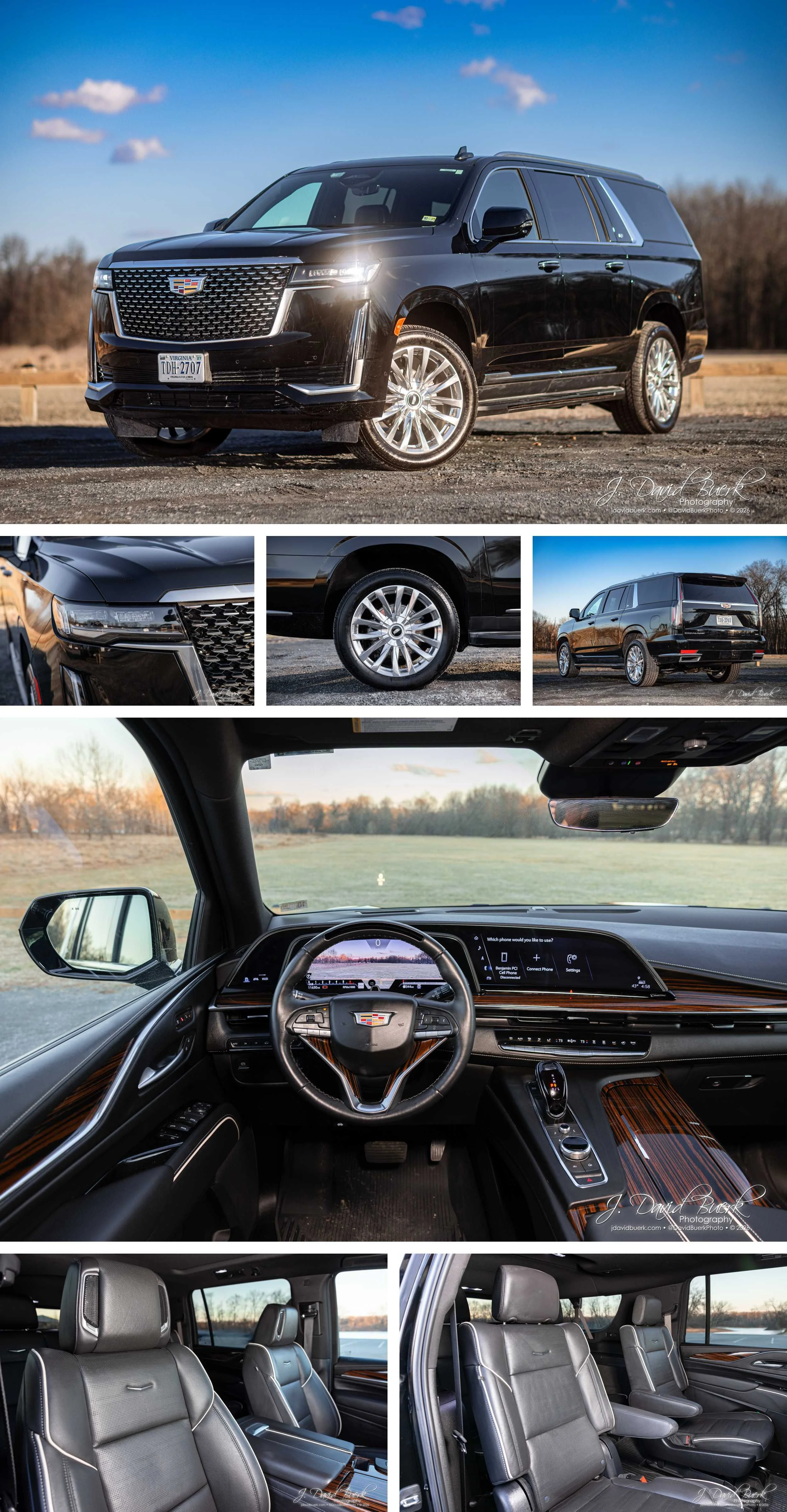
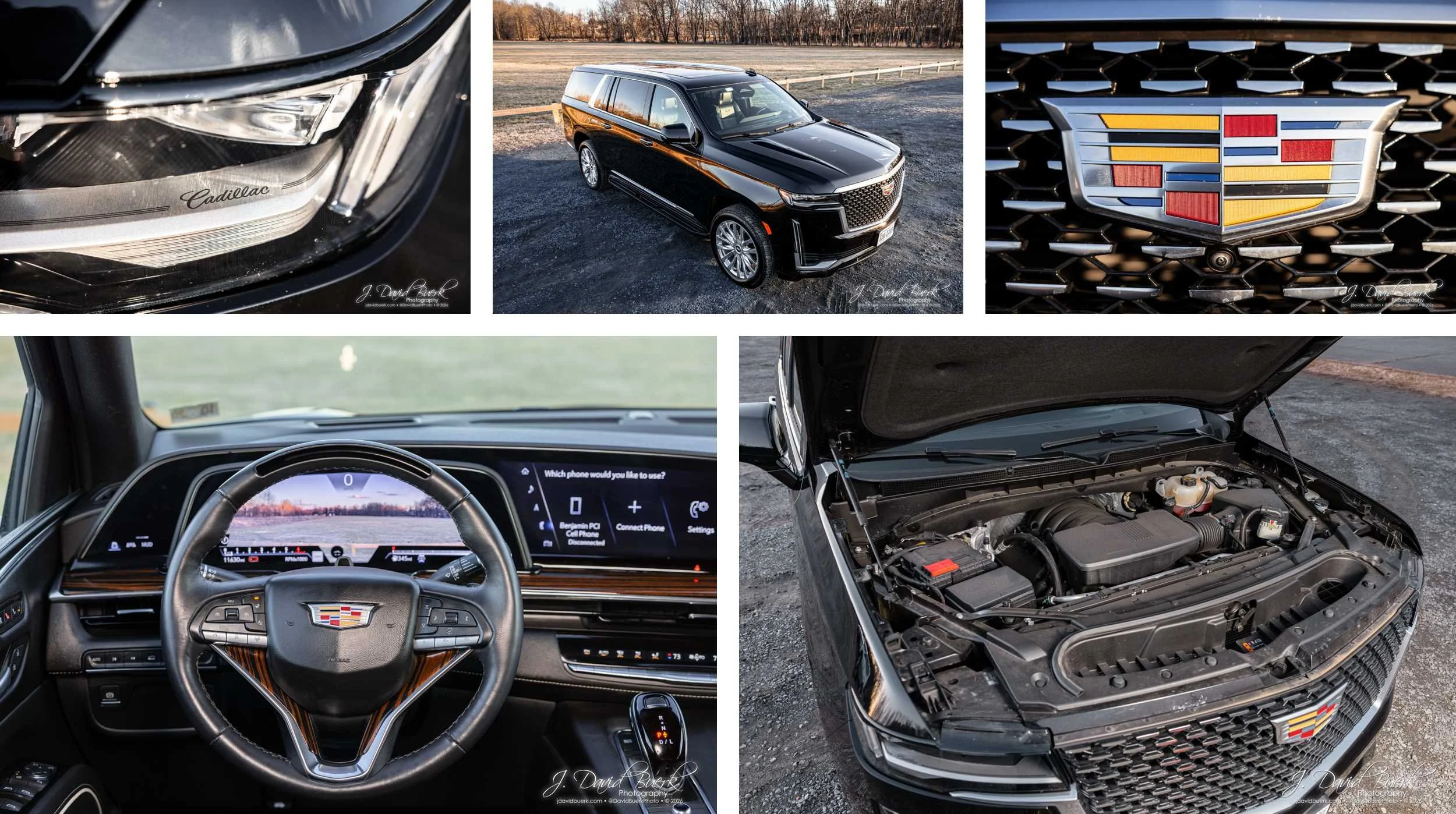
In today’s post, enjoy this 2024 Cadillac Escalade ESV photographed in the Winter in preparation for sale at auction.  With only 11,000mi on the clock, this is a very low milage Escalade.

The 2024 Cadillac Escalade ESV is a full-size luxury SUV defined by its extended length, commanding presence, and focus on comfort and technology.  Powered by a 6.2-liter V8 producing around 420 horsepower and paired with a 10-speed automatic transmission, it delivers smooth, confident performance with available four-wheel drive and substantial towing capability.  The ESV variant emphasizes space, offering three rows of seating for up to seven or eight passengers along with significantly increased cargo capacity compared to the standard Escalade.  Inside, it features a highly digital cabin anchored by a large curved display, premium materials, and an available AKG sound system, along with advanced driver assistance technologies such as adaptive cruise control and Cadillac’s hands-free Super Cruise system.  Known as Cadillac’s flagship SUV, the Escalade ESV combines size, power, and luxury in a format designed for buyers prioritizing interior space and high-end amenities.

When photographing vehicles for auction or sale, I capture a comprehensive photoset from all angles and capturing many more angles and details of the vehicle than highlighted here, to comply with many auctionhouses’ requirements.

J. David Buerk - Photography is not the vehicle’s seller - do not contact for vehicle purchase inquiries.

2025 Washington Auto Show + HDR Commentary

Today’s post comes with a giant 🤓nerd-alert🤓, as I discuss technical details in an evolving World of imaging, applied to car geekery.

Like most years at the Washington Auto Show, I spent my time at 2025’s expo exploring the show floors with a camera, using the event to casually experiment and hone skills in between exploring the latest automotive offerings.  Practicing upcoming techniques in no-pressure situations is a great risk-free way to keep skills on the cutting edge.

Last year I gathered footage to practice with my HDR video editing workflow.  This year I did the same with some proper 120fps footage, and also edited all still images from the day in HDR, as HDR still formats are upcoming and I like always staying knowledgeable and prepared.

I’ve edited several personal photosets in HDR to practice and learn how the new formats accommodating expanded range of luminance is currently able to be edited and to ensure backward compatibility with SDR displays - for video, HDR is widely available and supported, with practically all new TVs and productions available in HDR formats.  Photos, surprisingly, however, are supporting HDR after video, with the format war still raging on; the predominant image format and paired colorspace has not been determined yet.

HEIF/HEIC seems to be the best choice, closely related to the HEVC video standard most end-user and web HDR video is deployed as: its high efficiency compression and support of gain maps and modern colorspaces like P3, however end-user support is still limited so it has not flourished except for Apple’s usage encouraging support to expand.  AVIF is a similar format that is promising, but even less widely supported than HEIC.  JPEG XL is not new, but is a much modernized expansion of the original staple JPEG format.  Then there is finally standard JPEG, which can be encoded with a gain map to enable HDR on HDR-compatible devices and applications, and is backwards compatible with SDR in the existing standard, however it is the least efficient of these filetypes, and gain maps are something of a tack-on making these files not always interpreted correctly by some applications.

Possibly a larger issue is how HDR stills can currently be edited.  One can edit a RAW file in HDR using the standard color and contrast edits we all know and love, however editing software may also offer SDR compatibility proofing and grading, which I’ve found is not able to exactly match the HDR grade - this is a critical shortcoming in terms of backward compatibility, and ensuring a consistent deliverable to end-users.  Furthermore, editing HDR images in Photoshop and maintaining the correct grading and luminance mapping is spotty, with use of Generative AI tools strangely returning SDR results in Photoshop while the same generative utilities used in Lightroom directly on a RAW file returning HDR results (or a result that is at least properly mapped to the image’s luminance - I must assume it is generating an SDR image and an HDR gain map to pair).

In short, despite HDR video being widely supported, support of HDR still images is still extremely limited, and is not currently ready for widespread use: compatibility is king, and SDR still images are still the standard one should be using for anything mission-critical, ie client deliverables.

NOTE: The images in this post are NOT HDR; they are SDR-only; my hosting provider currently does not support HDR filetypes, as it converts all uploaded media to standard SDR JPEGs for web efficiency - hopefully some day in the future HDR data will not be stripped, and modern filetypes will be supported.  These images were natively tone-mapped on export for viewing in SDR as close as possible to their HDR versions.